

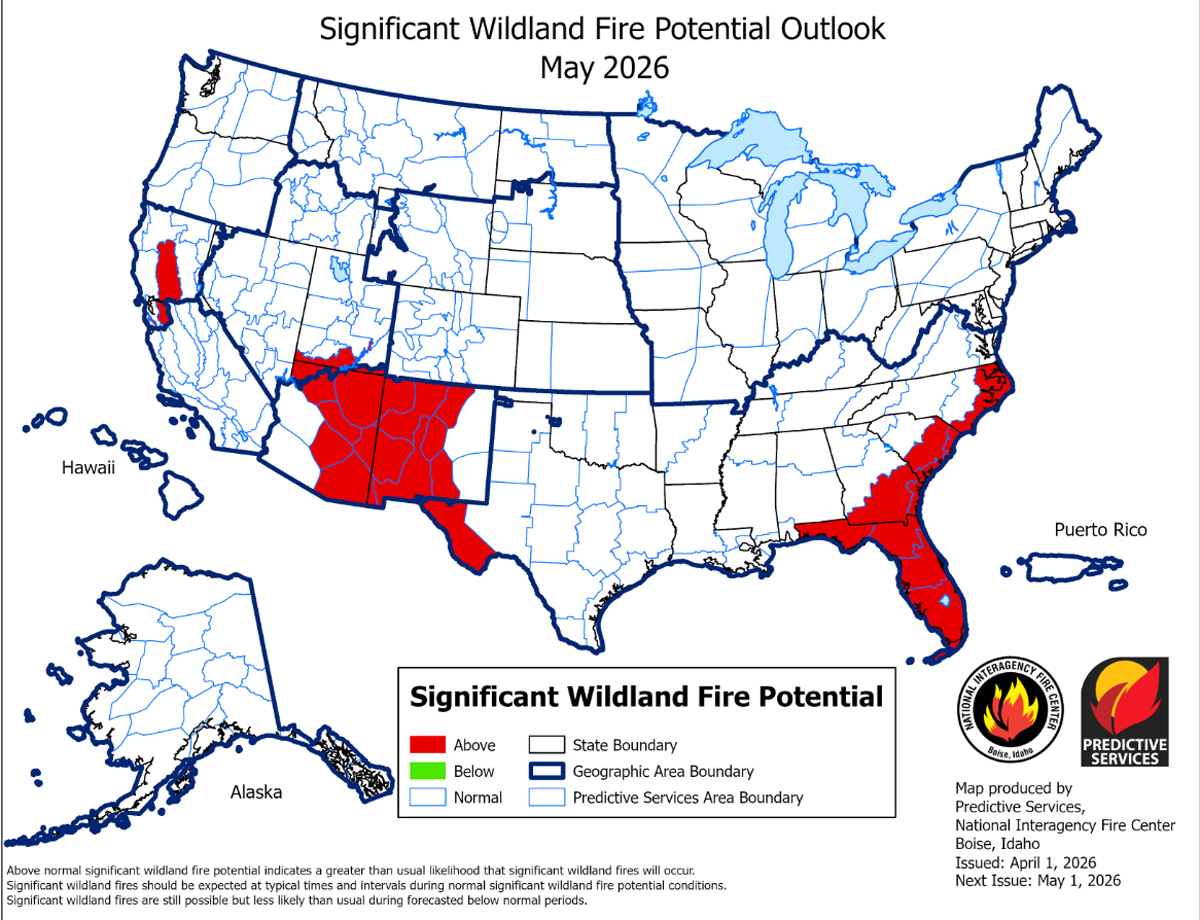
Northern New Mexico is expected to face an above-normal risk of significant wildfires in May, according to the latest National Significant Wildland Fire Potential Outlook from the National Interagency Coordination Center.
In response to extremely dry conditions and heightened wildfire danger, the Carson National Forest will begin Stage 1 fire restrictions on April 24.
Residents and visitors are urged to take these restrictions seriously. Current conditions mean it would take very little to ignite a wildfire, so use extreme caution with anything that could create a spark. Protecting our communities and forests depends on all of us.
The outlook places much of northern and central New Mexico in a zone where conditions favor more frequent or more intense wildfires than is typical for this time of year.
Fire officials use the monthly outlook to guide staffing, equipment positioning and other preparedness measures ahead of peak fire season. The assessments combine forecasts from regional predictive services units across the country.
Above-normal fire potential indicates a greater likelihood of large, significant wildfires, though it does not guarantee that fires will occur.
Much of the heightened risk in northern New Mexico is driven by a combination of dry fuels, lingering drought conditions and seasonal warming that can accelerate fire behavior in late spring. The outlook is updated at the beginning of each month and is intended to help fire managers make proactive decisions aimed at protecting lives and property.
Residents in northern New Mexico can take several steps now to reduce their risk as wildfire season approaches.
Fire officials recommend creating defensible space by clearing at least 30 feet of dry vegetation and debris around homes, trimming trees and keeping flammable materials like firewood away from structures. Homeowners are also urged to “harden” their properties by cleaning gutters, installing ember-resistant vents and using fire-resistant building materials when possible.
Authorities advise families to develop evacuation plans that include multiple routes, emergency supply kits and arrangements for pets and livestock. Staying informed is also critical, including signing up for local emergency alerts and monitoring fire weather conditions such as Red Flag Warnings. In addition, residents should take care with everyday activities by avoiding outdoor burning during dry, windy conditions and ensuring campfires and equipment are used safely to prevent accidental ignitions.