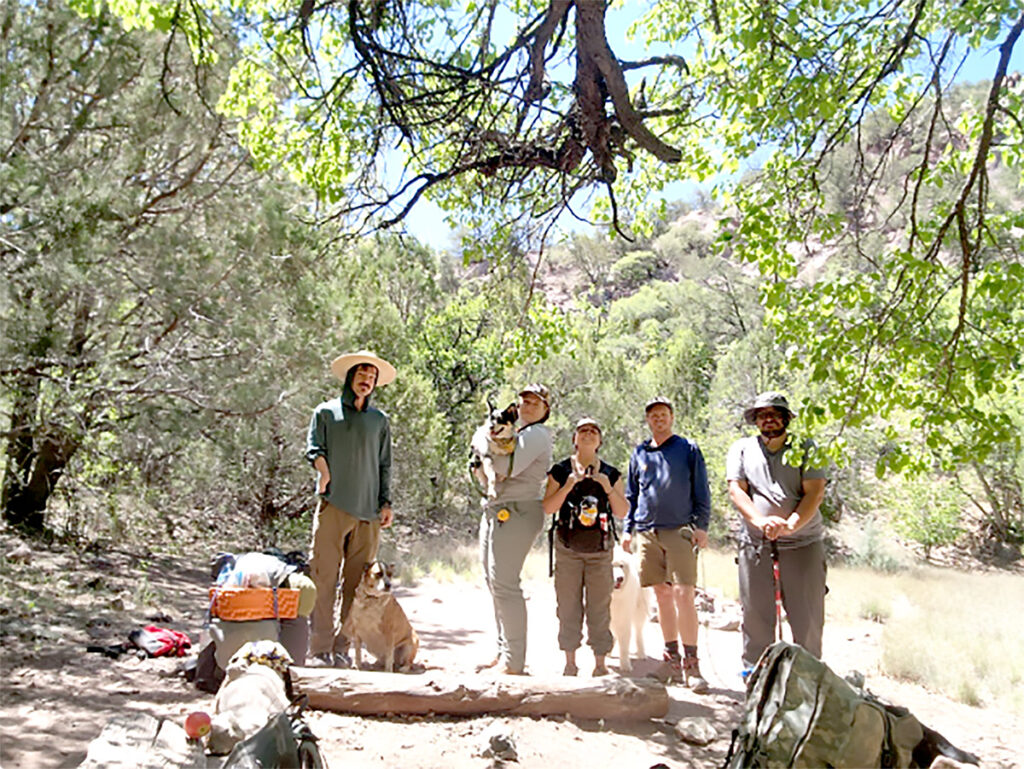
UNM-Taos Climate Change and Sustainability class took their learning into the field during a May backpacking course in the Gila Cliff Dwellings National Monument, where the landscape became the classroom. Over the course of the trip, students explored how climate change, fire, water, wildlife, vegetation, geology, and human history all intersect in one of New Mexico’s most ecologically and culturally significant regions.
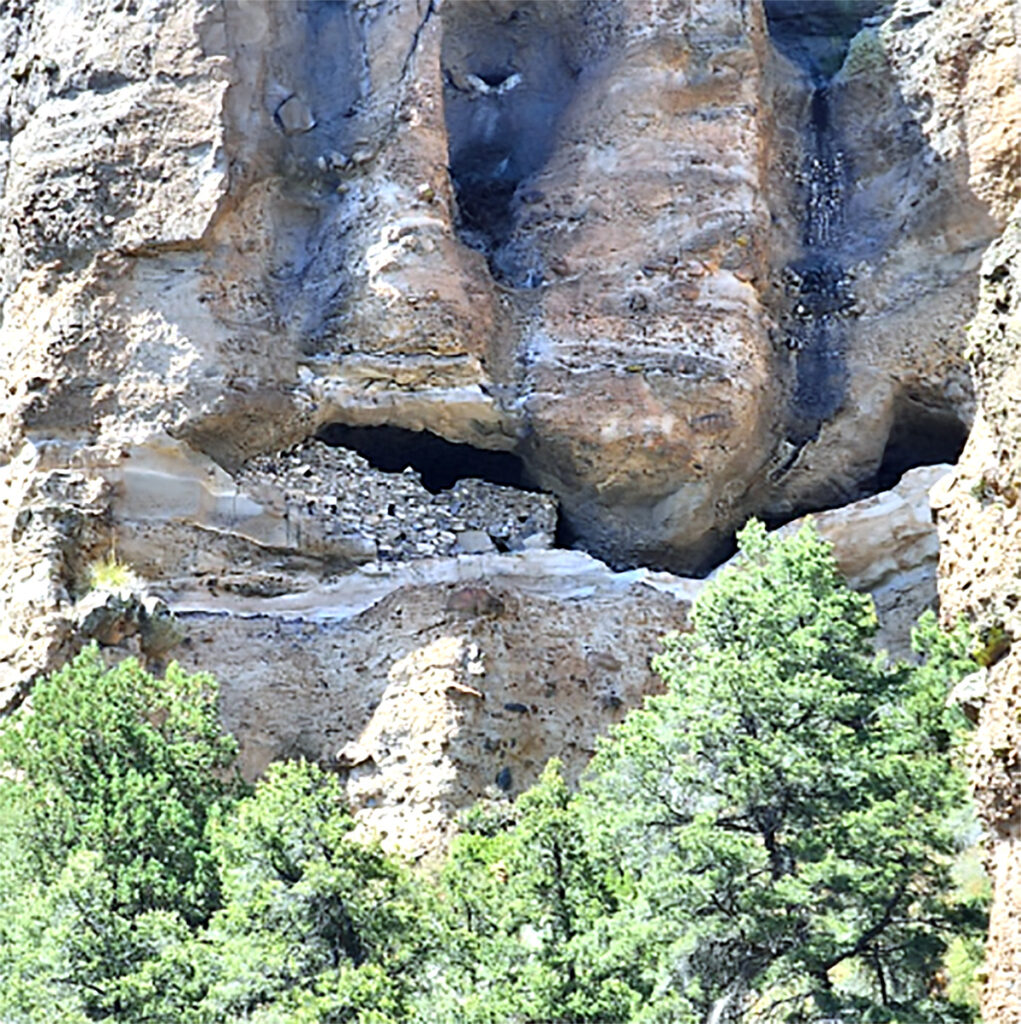
Led by UNM-Taos Natural Resources Management (NRM) Program Coordinator Dillon Alexander, the course gave students a chance to connect big sustainability concepts to direct field experience. Rather than only reading about climate impacts, watershed systems, disturbance, or public lands management, students observed these processes firsthand while hiking through canyon systems, riparian areas, forested slopes, and culturally important landscapes. Experiences like this help students understand that sustainability is not abstract; it is evident in water availability, changes in vegetation, fire effects, land-use history, recreation, and the decisions communities make about how to live with changing environments.
This type of field-based learning is central to LISTOS (a preparedness program designed to empower Spanish-speaking communities to effectively prepare for and respond to emergencies and disasters) and the NRM program at UNM-Taos. Students build confidence outdoors, practice observation skills, learn from place-based examples, and begin to see themselves as future professionals in natural resources, sustainability, conservation, public lands, forestry, wildlife, and climate resilience work.
During the Gila backpacking course, students were joined by a UNM-Taos/LISTOS alumnus from a previous cohort who recently graduated with a B.S. in Geology from NMHU after transferring from UNM-Taos. Their participation added an important layer to the field course by helping students understand how geology shapes land use, water movement, canyon formation, vegetation patterns, recreation, and long-term human relationships with the landscape.
This moment highlights one of the strengths of LISTOS: Students are not only supported while they are enrolled, but can remain connected to the program as alumni, mentors, and emerging professionals. By bringing graduates back into field experiences, current students get to see real examples of where these academic pathways can lead.
In the Gila, sustainability came to life—and so did students’ visions for their future. Through hands-on learning and strong mentorship, UNM-Taos continues to empower the next generation of leaders ready to care for the land and the communities connected to it.
To learn more about the UNM-Taos Natural Resources Management Program, contact Dillon Alexander alexanderd@unm.edu.
Advertorial paid for by UNM Taos