

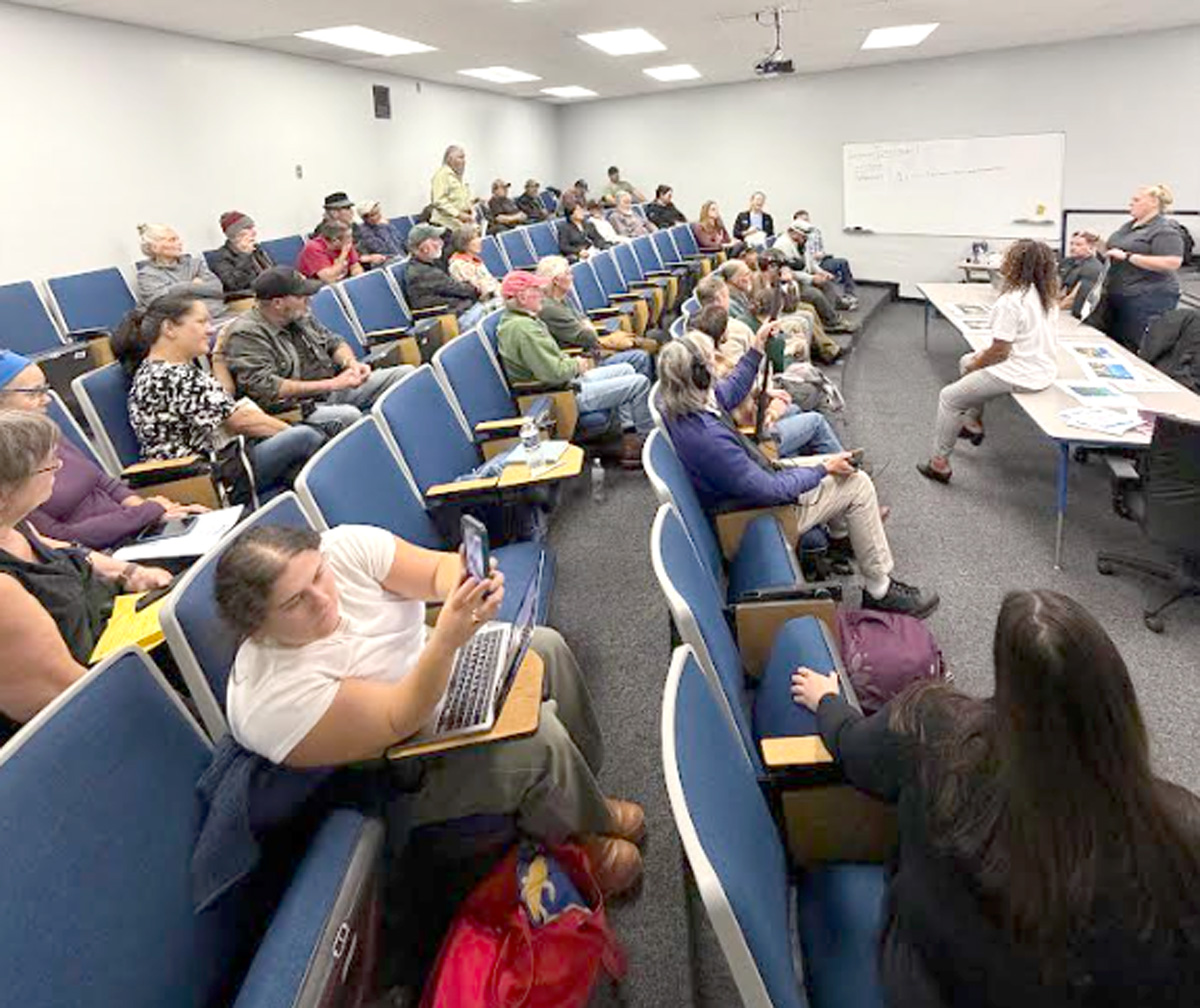
On September 24, roughly 40 community members gathered at the Alta Vista Elementary lecture hall for an update on the Chevron/Molycorp Mine Superfund site. Organized by the U.S. Environmental Protection Agency (EPA), New Mexico Environment Department (NMED), and New Mexico Energy, Minerals and Natural Resources Department (EMNRD), the meeting covered ongoing water treatment, soil remediation, and long-term health evaluations.
The Questa mine operated for nearly a century before closing in 2014 and was designated a Superfund site in 2011, requiring long-term environmental management and restoration. The site contains approximately 300 million tons of waste rock across nine piles and 100 million tons of tailings.
Protecting the Red River
Under the site’s formal consent decree, Chevron must prevent contaminated mine water from reaching the Red River.
- Pumping Underground Mine Water: Chevron continuously pumps underground water to keep its level below that of the Red River, preventing contaminated water from migrating into the river.
- Wastewater Treatment & Filter Cake: A dedicated treatment plant cleans the pumped water before it is discharged into the Red River. The remaining sludge is compressed into a dry material called filter cake.
- Long-Term Repository Evaluation: Filter cake is currently stored at an interim location while field teams evaluate whether the mine’s open pit could serve as a permanent repository. The investigation is examining how the filter cake interacts with existing pit materials before final design and remedial action.
Cleaning Up Tailings
Five primary areas across the mine, mill site, and tailings facility are slated for cleanup, with projects at various stages of design and implementation.
- Tailings Facilities, Dam 1 & Dam 4: Fieldwork at Dam 1, covering roughly 250 acres, is complete and will inform design will inform design for the approximately 370-acre Dam 4 facility.
- Historic Maintenance Area: Tailings deposited near a former maintenance building outside the main tailings facility are being mapped. Chevron has submitted a field report documenting the depth and extent of contamination to guide cleanup.Nicole Foster, EPA Remedial Project manager, did mention the contractor replacing Granite should be selected by December this year.
- Embargo Road Seepage: After seepage-system upgrades and removal of pumpback ponds to control groundwater contamination, cleanup teams are shifting their focus to soil contamination south of the tailings facility.
With multiple agencies present, the team clarified who is responsible for each role.
- EPA (Physical Cleanup): EPA oversees engineering, physical cleanup, and risk assessments used to establish legal criteria for remediation. Under federal guidelines, cleanup action requires demonstrating that contamination exceeds established health thresholds.
- NMDOH (Community Health): The New Mexico Department of Health (NMDOH) now leads state-level evaluation of public-health concerns at 15 Superfund sites statewide, a role historically handled by federal agencies such as the Agency for Toxic Substances and Disease Registry (ATSDR). NMDOH focuses on how environmental conditions may affect human health.
- Risk assessors evaluate current conditions and future land-use scenarios by examining how people could be exposed to chemicals through ingestion, inhalation, or skin contact.
- Primary contaminants were discussed during the risk assessment. Key substances include molybdenum, which is associated with non-cancer health effects such as joint pain or fatigue; polychlorinated biphenyls (PCBs), historically concentrated around the mill area; and heavy metals.
- Past Exposure: Risk assessments consider present and future risks, but historical exposures from decades ago cannot be directly measured because chemicals change or degrade over time. Previous assessments found that exposure pathways such as dust inhalation and eating local garden produce did not exceed long-term safety thresholds.
- Private Wells: Municipal water systems are routinely monitored, but health officials strongly encourage Questa residents who rely on private drinking-water wells to have their wells tested to help ensure groundwater safety.
Green Hydrogen
During the open Q&A, many attendees raised concerns about the proposed green hydrogen plant and its location within the Superfund site.
EPA clarified that although the proposed facility is within the broader Superfund boundary, it is not located on top of mine tailings. Officials also said the areas containing the site’s solar arrays are not designated tailings areas.