

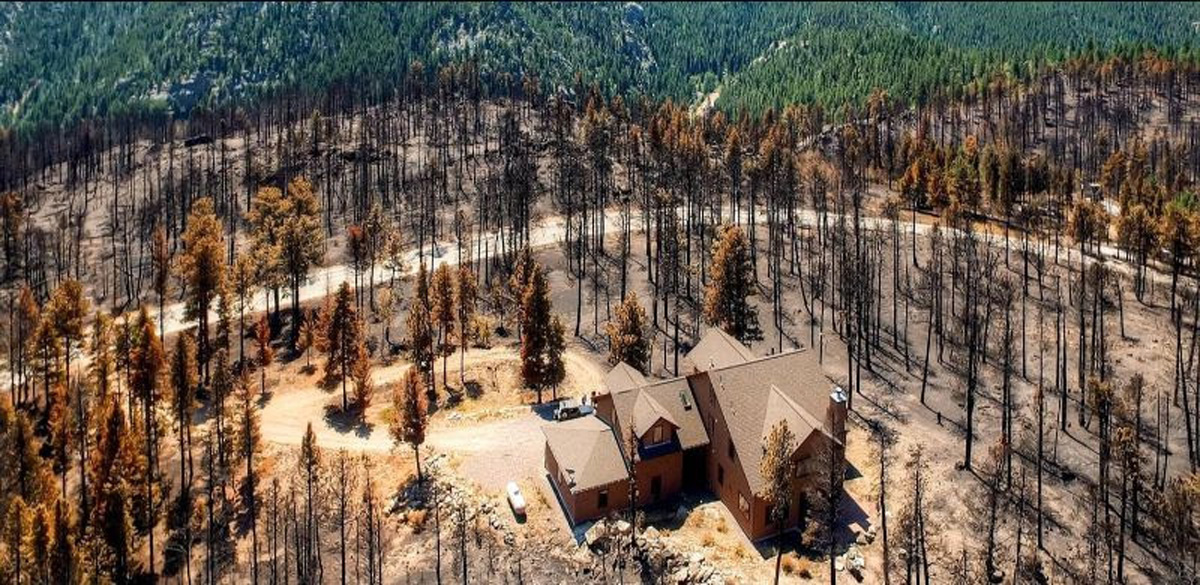
As New Mexico braces for what officials describe as an exceptionally dangerous wildfire season, state forestry leaders are urging residents to create defensible space around their homes, saying the measure can mean the difference between a house surviving or being destroyed.
An historically low winter snowpack and prolonged dry conditions have set the stage for heightened wildfire risk across the state. Nowhere is the threat more acute than in northern New Mexico, where Taos County is experiencing drought conditions not seen in more than a century.
According to the U.S. Drought Monitor, the region has not faced such dryness in 132 years. Most of Taos County is classified as abnormally dry, with severe drought covering about 8% of the area.
“We’re heading into an exceptionally warm and dry wildfire season,” Energy, Minerals and Natural Resources Department Acting Secretary Erin Taylor said. “These extreme conditions call for extra precautions.”
Fire officials say one of the most effective protections is creating defensible space, otherwise known as a buffer zone around homes that removes or reduces flammable vegetation and materials, helping slow or stop the spread of fire.
“Wildfire doesn’t care if it burns in an urban or rural community,” State Forester Laura McCarthy said. “Home hardening and defensible space are some of the most impactful and easiest steps people can take to stop the spread of catastrophic wildfire.”
Defensible space is designed to protect homes from embers, which are small pieces of burning debris that can travel more than a mile ahead of a wildfire. These embers often ignite homes by landing in dry leaves, pine needles or other combustible materials near structures.
State officials recommend clearing all dead vegetation within at least 5 feet of a home, removing flammable items such as wood piles and outdoor furniture, and replacing combustible mulch with gravel or other nonflammable materials. Pruning shrubs and trimming overhanging branches also can reduce the likelihood that fire will reach a home.
The state is also encouraging homeowners to take part in the Wildfire Prepared Homes program, which offers certification for properties that meet wildfire safety standards. The designation can help homeowners maintain insurance coverage as insurers increasingly limit policies in high-risk areas.
For those who struggle to obtain fire insurance, the New Mexico Fair Access to Insurance Requirements Plan offers coverage, and some homeowners may qualify for grants to offset the cost of wildfire mitigation upgrades.
With peak fire season approaching this summer, officials say preparation now is critical — especially in drought-stricken areas like Taos County, where conditions are primed for fast-moving and destructive wildfires.