

An independent groundwater study commissioned by Kit Carson Electric Cooperative as part of its proposed green hydrogen project in northern New Mexico remains underway, with results expected by June 12 as community debate over the project continues to intensify.
The study, being conducted by Glorieta Geoscience, is designed to assess how pumping groundwater from a former Chevron mining well could affect aquifers and water supplies in the Questa area. The findings are expected to address one of the primary concerns raised by opponents who argue the region lacks sufficient water resources to support hydrogen production.
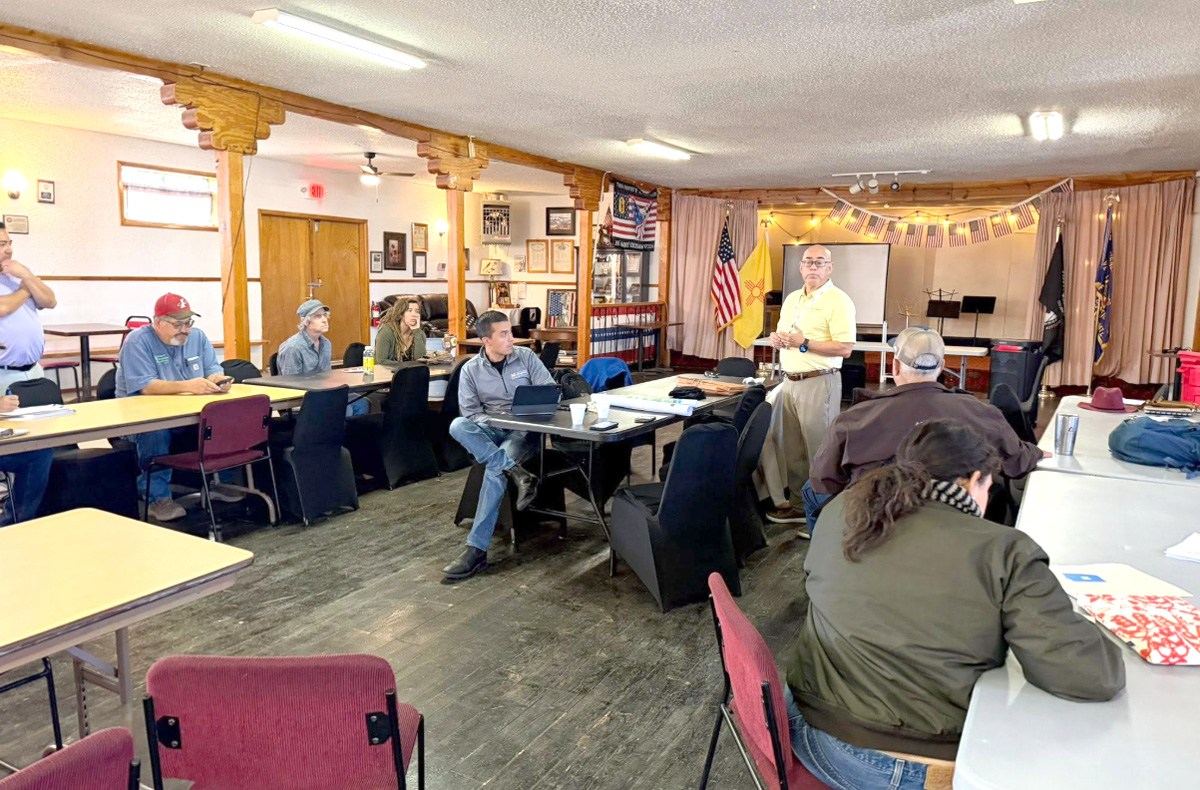
For more than a year, Kit Carson Electric Cooperative officials have held public meetings in Questa, Costilla, Cerro and Taos, as well as numerous one-on-one conversations with residents, to hear concerns and answer questions about the proposed project. Opposition has remained organized and vocal.
Many residents opposed to the project have formed a group known as the Watershed Protectors, which focused on sharing research and information they say raises questions about the effectiveness and economic viability of green hydrogen projects. Members of the group have regularly attended village council meetings and other public forums throughout the region, expressing concerns about water use and urging local officials to oppose the proposal.
Much of that opposition has centered on a shift in the project’s proposed water source. Several residents who initially supported the concept when officials discussed using treated water from Chevron’s reclamation operations say they changed their position after learning the project would instead rely on groundwater from a production well.
In response to those concerns, Kit Carson commissioned the hydrogeologic study to provide an independent evaluation of groundwater conditions and available water supplies.
Kit Carson Chief Executive Officer Luis Reyes said in a statement, “I talked to New Mexico Tech and USGS because they had worked for the Village of Questa and northern New Mexico issues on information about aquifers in the area and water quantities.”
Reyes said those organizations referred him to GZA GeoEnvironmental’s Glorieta Geoscience division because of its previous work in the Questa area.
“We’ve been relying on data maintained by the state, and this study will help determine whether those records are accurate in showing there’s enough water available to support this project,” Reyes said.
Reyes stated the study was commissioned after repeated questions from residents regarding groundwater supplies.
“Based on all the information that members are asking about water and all the misinformation that was disseminated by the opposition, I felt the best way to approach the water issue was to get experts involved that knew the water issues in northern New Mexico as well as the State of New Mexico,” Reyes said. “New Mexico Tech is the leader in water study and knowledge for New Mexico water issues.”
According to project documents, the proposed hydrogen facility would require up to 100 acre-feet of groundwater annually over a 30-year period. The production well identified for the project holds an adjudicated water right of 250 acre-feet per year. The current phase of the study includes compiling geological and hydrological data, evaluating aquifer characteristics and developing a three-dimensional visualization model of groundwater conditions throughout the Questa area.
Some opponents have also questioned whether the study can be considered fully independent because it was commissioned and funded by Kit Carson Electric Cooperative, which is pursuing the hydrogen project.
Reyes acknowledged those concerns but said the cooperative sought outside experts specifically to provide an objective assessment of the region’s groundwater resources and help determine whether the project should move forward.
“I live in this community and have worked in this community for decades,” Reyes said. “Every decision I’ve ever made on behalf of the cooperative has been in the best interest of the community and that dedication doesn’t stop now. We are using the data to determine the best path forward.”
The report is expected by June 12 and is anticipated to become a focal point in the ongoing debate over the project, with supporters and opponents alike awaiting data that could shape the future of hydrogen development in the region.