

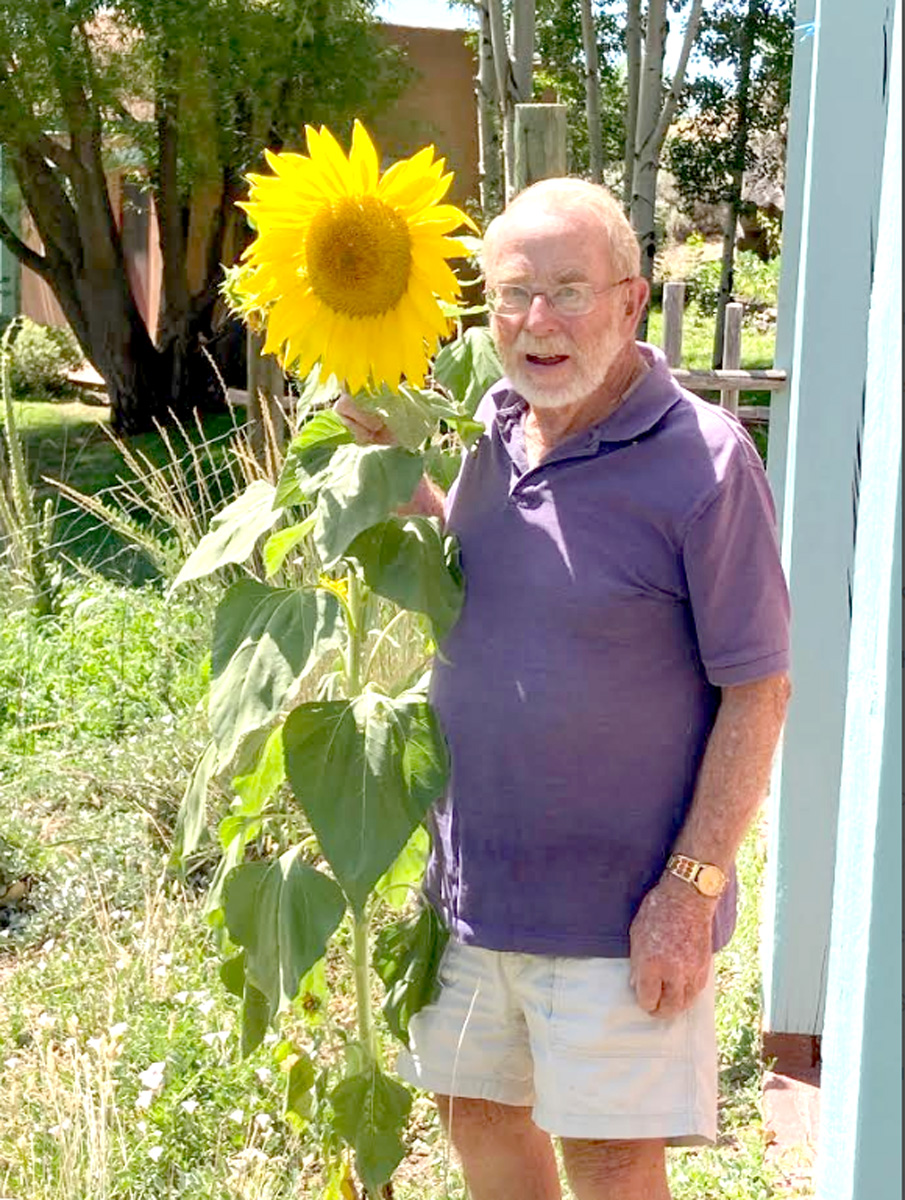
Long before northern New Mexico had a network of pediatricians serving children across its rural communities, Dr. Anderson was driving from town to town, opening clinics, treating sick children and answering calls in the middle of the night.
He went where he believed he was needed most, even when it meant taking a substantial decrease in pay.
When Anderson moved to Taos in 1976, the community had no pediatrician. He left Los Alamos, where he had practiced after moving from Alaska to serve families in a region with limited access to medical care.
The decision reflected a lesson he had learned years earlier while treating Alaska Native children in remote communities: A doctor’s presence could mean the difference between life and death.
After graduating from medical school during the Vietnam War era, Anderson wanted to specialize in pediatrics. He joined the Indian Health Service as a commissioned officer and served in Sitka, Alaska, caring for Native children across a vast stretch of southeastern Alaska.
The conditions he encountered left a lasting impression. His daughter, Gingy Anderson, recalled that infant mortality rates in Native populations were several times higher than the national rate, along with serious threats from tuberculosis, meningitis and other illnesses. Vaccines and preventive care were not always reaching the families who needed them.
The experience shaped his understanding of medicine and strengthened his commitment to underserved communities.
Anderson and his first wife, Genna Lewis, moved their family to Los Alamos in 1965. After their marriage ended in 1972, he married Edy Anderson, a nurse who worked in nursing leadership and public health. Charlie and Edy married in Los Alamos and continued to live there until 1976, when they moved together to Taos. Through his marriage to Edy, Anderson also gained five stepchildren.
The move meant leaving the more affluent community of Los Alamos for one with greater medical needs in northern Taos County.
“He saw the need,” said his stepson, Ted Wiard. “And that’s where the need was.”
Anderson did not limit his work to Taos. He helped open clinics in communities including Questa and Peñasco, traveling to reach children whose families might otherwise struggle to obtain care.
The work was not always financially rewarding. Some professional partners questioned the time he spent at clinics that generated little income, his family recalled. But Anderson remained focused on the children and families who needed him.
He established the Taos Clinic for Children and Youth (TCCY) in 1976, creating a home base for his work and helping lay the groundwork for a stronger pediatric care network. Over time, other physicians, including Dr. Loretta Ortiz Y Pino and Dr. Villarreal, known as Dr. V., joined his clinic.
Their work helped build a foundation of care that northern New Mexico families could rely on, a legacy that remains significant as the state continues to face a shortage of physicians.
For Anderson’s children, his dedication was part of everyday life.
They remember mornings when they woke to discover their father had been gone all night, caring for patients. When they asked where he had been, his answer was matter-of-fact.
“I was busy saving lives,” he would tell them.
Before cellphones, he carried a pager. When it went off in the middle of the night, he left home to see another patient.
Some families who couldn’t afford to pay for medical care brought what they could instead. His children remember people arriving at the family home with elk meat or lamb to thank the doctor who had cared for them, and he always graciously accepted what people could give.
Those gestures reflected the trust he built with patients over decades.
Anderson also knew how to make medicine less frightening for children. At the clinic, many patients recall him pretending to be a frog, ribbiting in a child’s ear to distract them while he examined it. “Some people joke that they still remember wondering if they really had a frog in their ear after they left the doctor’s office,” Ted Wiard said with a laugh.
Dr. Anderson often combined his medical work with his love of skiing. When taking his family to Taos Ski Valley, he would stop at the chalet to give flu shots before heading to the slopes. His goal was always to vaccinate as many people as he was able.
He skied until he was 88.
His children grew up skiing, too, and remember camping adventures in tents while their family enjoyed the pristine outdoors. His example shaped not only their childhoods but also their understanding of what it meant to build a meaningful life.
For Wiard, his stepfather modeled how to live life passionately and fully, caring deeply for your community, loved ones and family. For Gingy Anderson, the lesson was to give your career to something bigger than yourself, while never losing your sense of wonder at the world and the life you’ve been given.
Anderson’s commitment extended beyond treating illness. He cared deeply about preventing it.
His family remembers how upset he became when he saw children suffer from vaccine-preventable diseases such as measles and mumps. Having witnessed the consequences of serious childhood illnesses in Alaska, he knew how much suffering could be avoided.
While visiting Gingy in western Colorado years ago, Anderson recognized a case of whooping cough in a woman that other doctors had not identified, his family recalled. The woman informed her doctors of the diagnosis, and about a week later, a whooping cough outbreak was declared in the county.
His expansive experience helped him recognize what others had missed. Former patients and their families continue to tell his children that he had saved their lives or the lives of their children countless times.
But medicine also exposed Anderson to pain he could not fix.
The death of Richard Wiard, Edy’s youngest son, was especially difficult. Anderson struggled with the grief of watching someone he loved suffer, and with the limits of his ability to ease that pain.
His instinct was always to help. When he couldn’t, the hurt remained. “He hurt so heavily because he couldn’t doctor it,” his family recalled. That pain reflected the same compassion that had drawn him to medicine: He felt deeply for people who were hurting, whether they were patients or family.
Edy shared his commitment to service throughout their life together, including through her work in public health and helping establish the Taos Community Foundation. She died in 2019.
In his later years, Anderson made more time for family and the outdoors. He stayed connected with his grandchildren, including those living in Oregon, Montana and Colorado, and traveled with Judy Lockwood, his partner and fellow medical practitioner in the final years of his life. They got together shortly before the COVID-19 pandemic.
As age caught up with him, he continued to make annual trips to Hawaii and never lost his appreciation for the natural world. Rivers, cliffs, clouds and wildflowers inspired him. Even after a lifetime of witnessing illness, he remained in awe of the world around him.
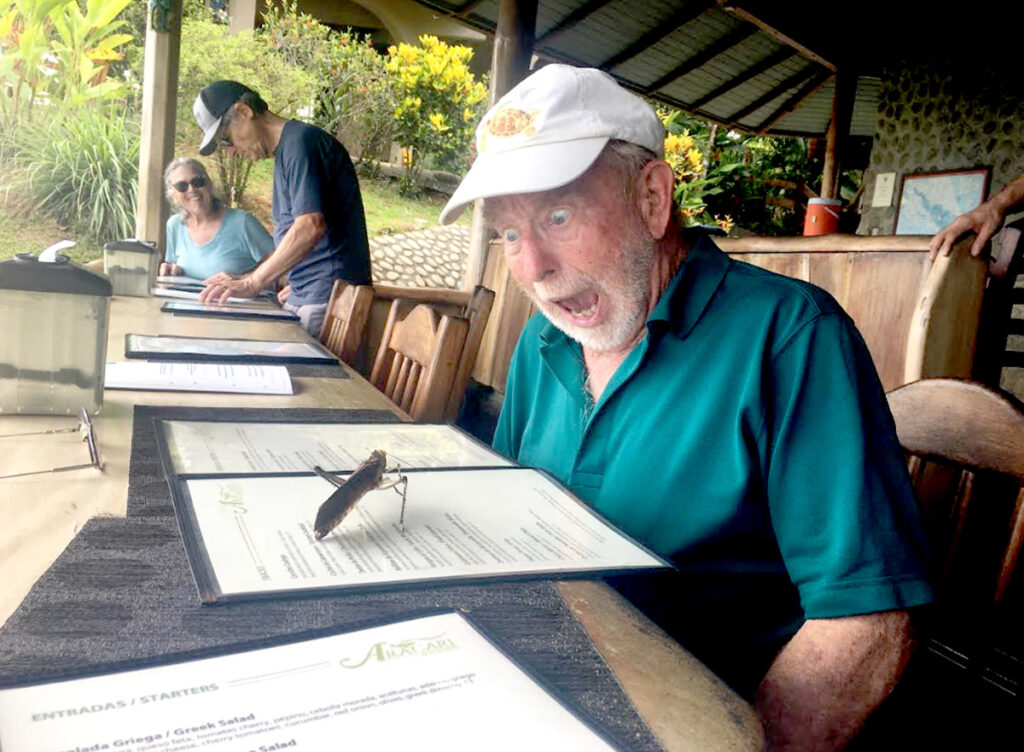
Dr. Anderson never lost his sense of humor, even when a giant grasshopper showed up on the menu.
About three weeks before his death, Anderson had become frail. Still, his family remembers how fiercely he embraced life.
“He just loved life,” Gingy Anderson said.
His family believes he held on as long as he could because he wanted to experience all that life had to offer. When he finally let go, they felt he knew his time had come.
In his final days, Anderson told Ted he was “no longer fit for this world.”
He leaves behind his children Gingy Anderson, Chauncy Anderson, Finley Anderson, Barb Wiard, Tom Wiard, Ted Wiard and Rob Wiard; 12 grandchildren; and three great-grandchildren. In addition to his wife, Edy, his stepson, Richard Wiard, daughter-in-law Leslie Wiard and two grandchildren, Keri and Amy Wiard, preceded him in death.
Anderson’s legacy is measured not only in the decades he practiced medicine but in the families he cared for, the physicians who followed him and the children whose illnesses he treated or helped prevent.
He gave up financial security to serve a community in need. He answered calls through the night. He traveled to rural communities where care was scarce and helped establish a pediatric network that would outlast his own practice.
But his family remembers more than a dedicated doctor. They remember a father and grandfather who taught them to care deeply, live fully and find purpose in serving others.
He showed them that compassion sometimes means carrying the weight of another person’s suffering, even when you cannot make it disappear. And he showed them that a life devoted to others need not diminish one’s own sense of wonder.
For Anderson, caring for children, loving his family and marveling at a river or wildflower were all part of the same calling: to embrace life, serve his community and leave the world a little better than he found it. And through it all, he remained a man who would stop to admire a wildflower, watch clouds move across a mountain or marvel at a river.
His family hopes that the lesson of his life endures: to live fully, to remain curious about the world and to make service to others part of one’s purpose.
For Anderson, those were never separate pursuits. They were all part of the same life.