

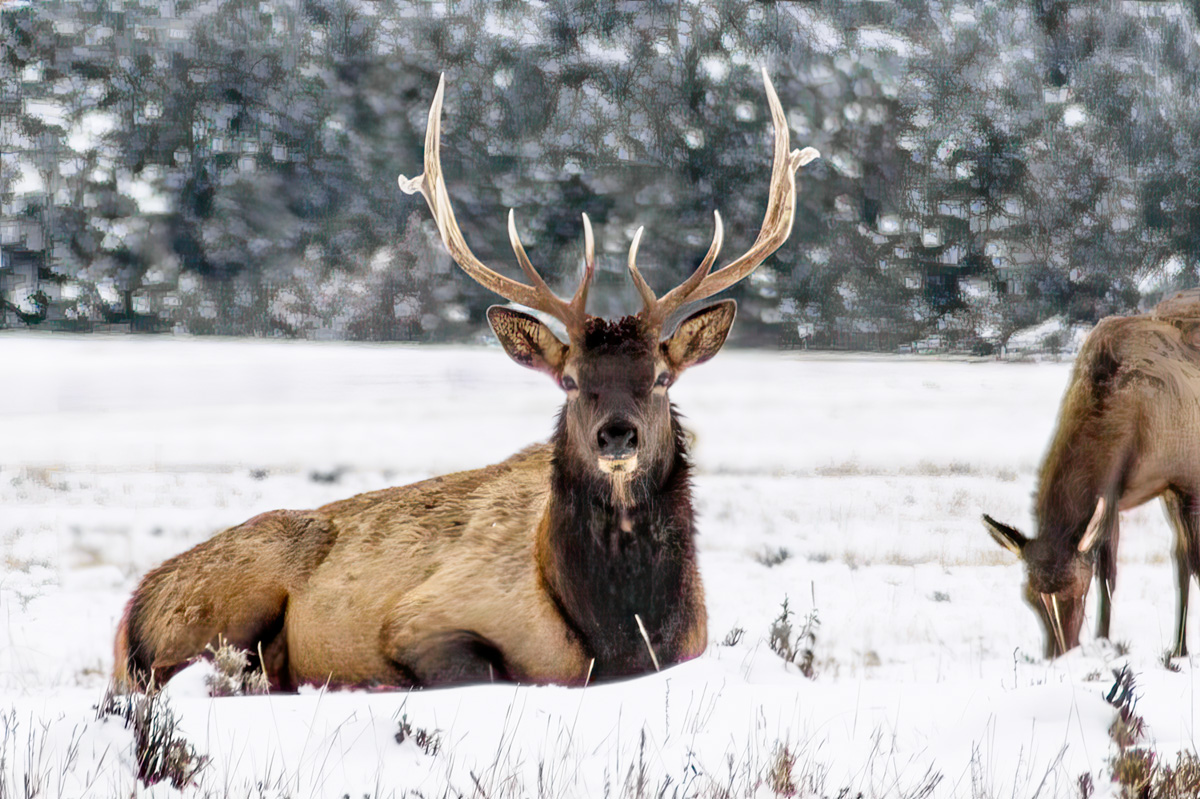
It is a sound unlike any you have heard in your own backyard, unless you live in the mountains of New Mexico. Primal, abrasive and guaranteed to send a chill down your spine — it’s special. It almost has a mechanical quality, and has been compared to the noise of a rusty pump handle, the kind used to pump well water years ago.
It is called bugling. It’s a fall phenomenon and you may hear it anywhere in the mountains. It is a genuine indicator that autumn is in full swing and winter is not far away. The screams of the bull elk in full rut will not soon be forgotten.
Don’t be surprised if you hear the bugling while you are in town. The sound can travel for miles and miles in the thin, clear mountain air. Its point of origin is anybody’s guess.
In the high country of Northern New Mexico, elk or wapiti — scientific name Cervus canadensis — are the biggest creatures in the woods. The only member of the deer family that is larger is the moose and, while moose have been known to wander south into New Mexico from Colorado while following the Rio Grande, they are not residents like the elk.
Wapiti are members of the deer family, but make no mistake, you will not confuse them with the mule deer that inhabit the Sangre de Cristo mountains. An elk can be twice the size of a deer, and an average weight can reach 700 pounds. In fact, an elk calf can weigh as much as a full grown deer. They are substantial creatures.
Only the males have antlers, which they shed every year, growing new ones each year. A bull elk’s antlers can reach 4 feet above its head, giving the animal a height of 9 feet! There are no 9-foot deer!
Do not be surprised if you see a large herd grazing in the Moreno Valley between Eagle Nest and Red River. It is unclear as to the exact size of that herd, but estimates over the past 20 years have ranged from 600 to 1000+.
Driving at night through the Moreno, especially in the winter, can provide an interesting thrill. The elk frequently gather on Highway 38 in an effort to enjoy the warmth of the asphalt. If you are traveling that road, do not be in a hurry. The damage they can inflict on a vehicle can be substantial.
If you’re headed north on highway 522 out of Questa towards Colorado, be on the lookout for elk who have been known to come down from the Latir mountains and cross the road headed to the Rio Grande.