

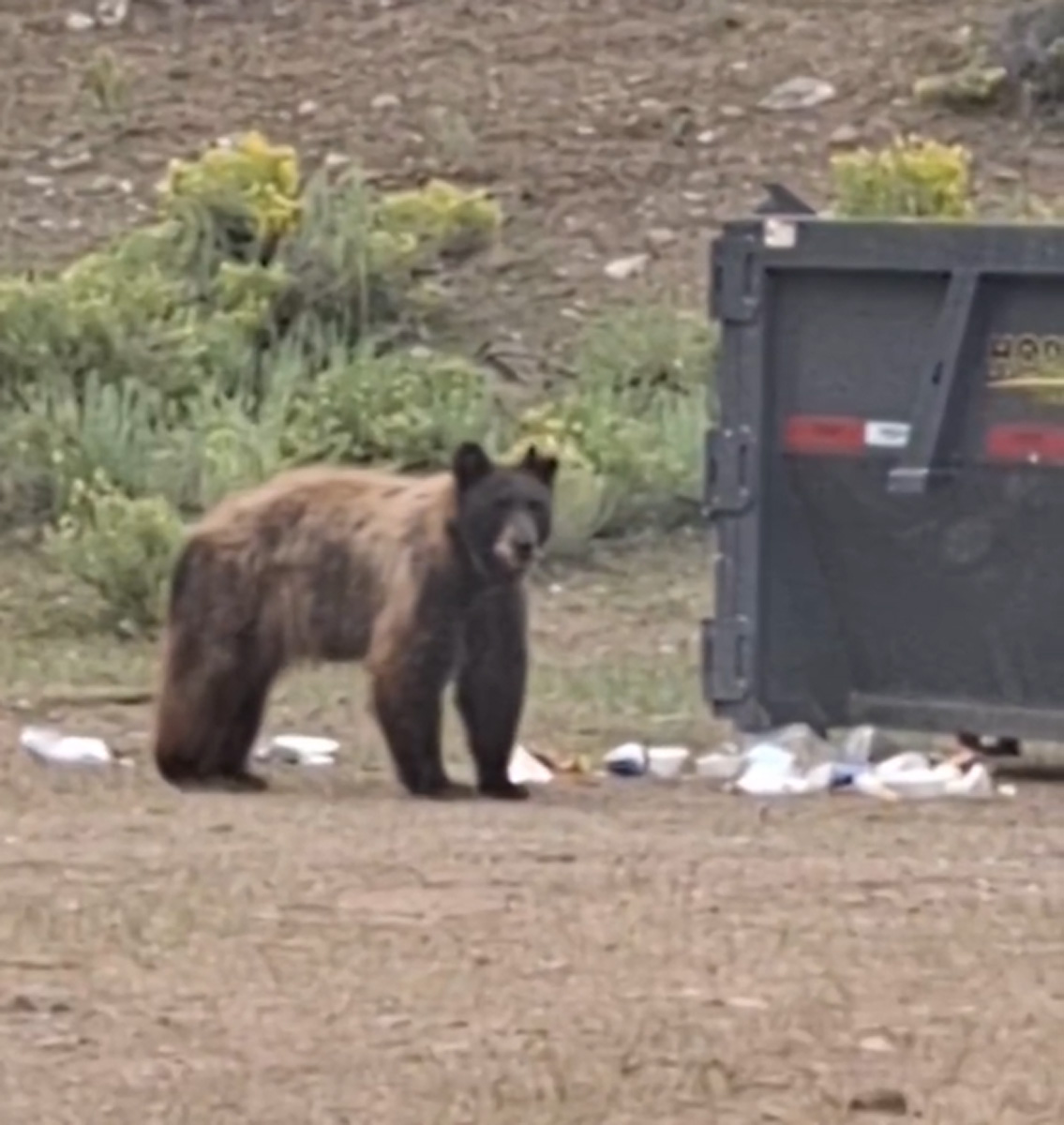
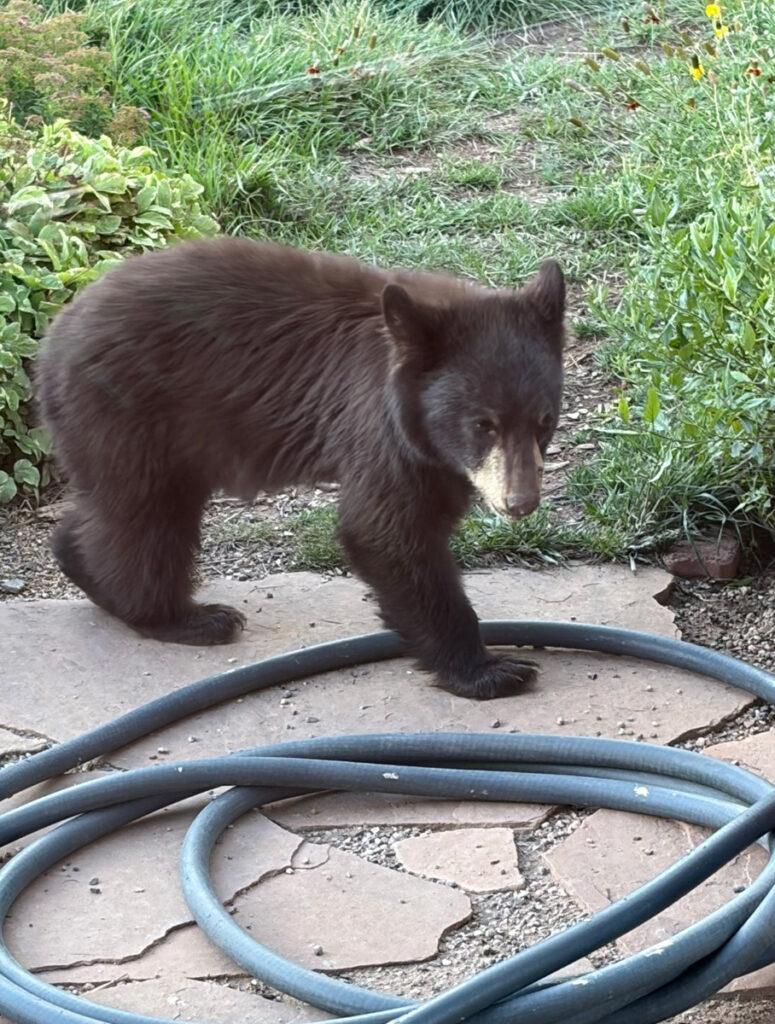
One of our readers in El Prado sent us this photo of a baby bear on her back patio sighted in Sept
New Mexico Game & Wildlife officials have received 36 bear complaints throughout Taos County this year, as warmer temperatures and dry conditions push bears into lower elevations in search of food and water.
The increase in bear activity in Taos County is part of a broader trend across New Mexico, according to the department. Higher temperatures and a lack of moisture this spring and summer have reduced food and water availability at higher elevations, forcing bears to move farther in search of resources.
That movement can bring bears into residential areas, where food and water are more readily available. Garbage, leftover pet food, birdseed and fallen fruit can all attract bears to homes and neighborhoods.
The department said its priority is to keep bears alive and prevent them from becoming habituated to people.
Residents can help by eliminating attractants from their yards and securing potential food sources, officials said.
Residents are advised to never feed or approach bears, intentionally or unintentionally. Bears that learn to associate people and homes with food can become habituated, increasing the potential for conflicts.
Garbage and recycling should be secured, and bird feeders should be removed when bears are active. Pet food should not be left outside, and outdoor pets should be fed portions that can be completely consumed at each meal.
Residents who use outdoor grills should clean them thoroughly after each use, removing grease and fat, and store grills and smokers in areas inaccessible to bears.
Wildlife officials also encourage residents to notify neighbors about recent bear activity.
Property owners can protect livestock, beehives and other potential attractants with fencing designed to keep bears out. Electric fencing has proven to be an effective deterrent without causing long-term harm to bears, according to the department.
Homeowners in bear country are also encouraged to take precautions around their properties. Fruit trees should be planted away from homes, fruit should be picked as it ripens and fallen or spoiled fruit should be removed. Woodpiles can attract rodents that bears prey upon and should be kept away from houses.
Compost piles should also be located away from homes and should not contain fragrant foods such as melon rinds. Livestock, chicken pens and beehives should be kept away from houses when possible.
People who encounter a bear while walking should remain calm and never run, wildlife officials said.
If a bear is spotted, stand upright, slowly wave your arms and back away. People should also watch for cubs and avoid getting between a mother bear and her young.
If a bear attacks, officials advise people to fight back aggressively.
The department said bears have adapted to living near people, and residents can help reduce conflicts by adapting their properties and habits to avoid providing bears with easy sources of food.