

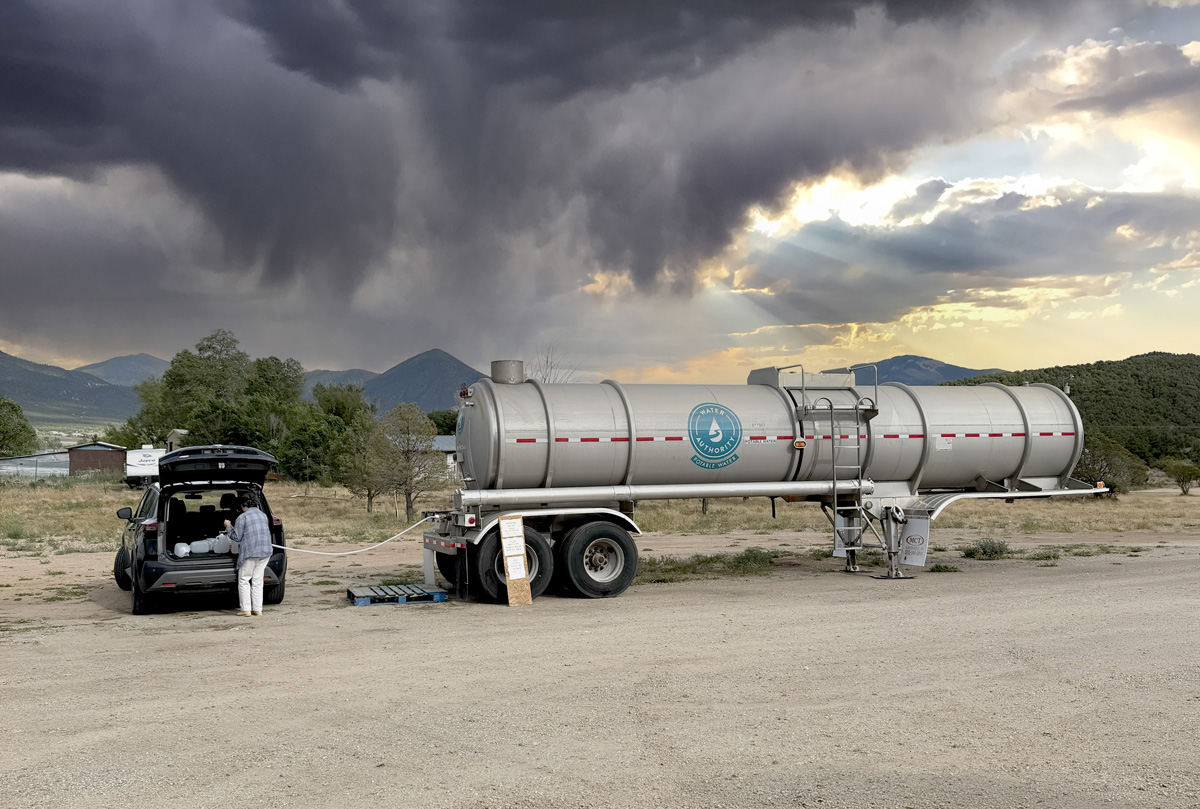
For two months, the people of Cerro have lived without one of life’s most basic necessities — reliable running water. Every day has become a routine of hauling bottled water, making difficult choices about cooking, bathing and cleaning, and wondering when normal life will return.
On Friday evening (July 17), a community meeting at the Cerro Community Center offered residents a measure of hope, it also underscored the reality that their wait is not yet over.
Representatives from the New Mexico Environment Department, the U.S. Environmental Protection Agency, the New Mexico Rural Water Association, and the Cerro Water Association gathered to provide residents with the latest updates on efforts to restore the community’s water system.
Among those in attendance were Joe Martinez, chief of the New Mexico Environment Department’s Drinking Water Bureau; Avery Young, major domestic waste team lead with the department’s Ground Water Quality Bureau; Brittany Coriz, an EPA technical assistance specialist with the New Mexico Rural Water Association; and Cerro Water Association President Vilma Bailon, along with Vice President Tomas Tharnish and board member Michael Montoya.
Officials shared encouraging news that recent water quality samples met safe drinking water standards. Although elevated iron and manganese levels may cause the water to appear brown or discolored when service resumes, they emphasized that the water remains safe. Even so, residents left the meeting without the answer they most wanted to hear, a definitive date when they will once again have water flowing from their taps.
The largest hurdle remaining is final state approval of the replacement well permit.
Officials explained that the engineering firm submitted the required application on July 13. While the normal review process can take 30 to 60 days, Martinez and Young expedited the review, returning comments to the engineering firm within just three days. Once the requested revisions are completed and the permit receives final approval, the New Mexico Rural Water Association can begin pumping water into the system.
From that point, restoring service will take approximately four days. Officials said about two days will be needed to pressurize the water lines, followed by another two days to chlorinate and disinfect the system before water can safely reach customers. The Cerro Water Association will notify residents before that work begins.
Although the meeting provided a clearer picture of the process, it also highlighted the challenges facing Cerro beyond the current outage.
Officials acknowledged there is no guarantee the replacement well will provide a permanent solution. With the local water table continually dropping, it is impossible to predict how long the new well can reliably meet the community’s needs.
Community members also asked whether the well drilled in 2008 could simply be deepened. Coriz explained that such a project would be expensive, technically challenging and offers no assurance that additional water would be found.
As frustration has grown during the outage, so have rumors about its cause. Claims that the community’s current water problems stem from financial mismanagement are simply not supported by the facts.
We confirmed that the annual spending and budget is reviewed and approved by the New Mexico State Auditors Office along with the New Mexico Finance Authority ensuring monies are spent ethically and legally.
The challenges facing Cerro are rooted in an aging water distribution system that dates back to the 1940s. Over the decades, water lines have spread throughout the community in a complex network that runs beneath homes, stables and other areas that are difficult to access. As the infrastructure has aged, leaks have become increasingly difficult to locate and repair, contributing to the system’s ongoing problems. Additionally, regional reporting has suggested that the pump burned out, however, this is inaccurate. Inaccessible leaks caused the aquafer to drop and deplete.
The current focus remains on completing the permitting process so the replacement well can begin supplying water. State officials emphasized they are working to move the application through the approval process as quickly as possible while ensuring all requirements are met.
For Cerro residents, however, each additional day without water is measured not in permits or engineering reports, but in the daily hardships that have become part of life. Families continue to rely on bottled water, conserve every available drop and adjust routines around a resource most communities take for granted.
The mid-July meeting brought continuous frustration that progress is not being made fast enough. Until water once again flows through Cerro’s aging pipes, residents remain united by both hope and the ongoing burden of waiting.
Questa del Rio News will continue following this story and provide updates as additional information becomes available, including an official timeline for restoring water service.