

Glute Exercise And History
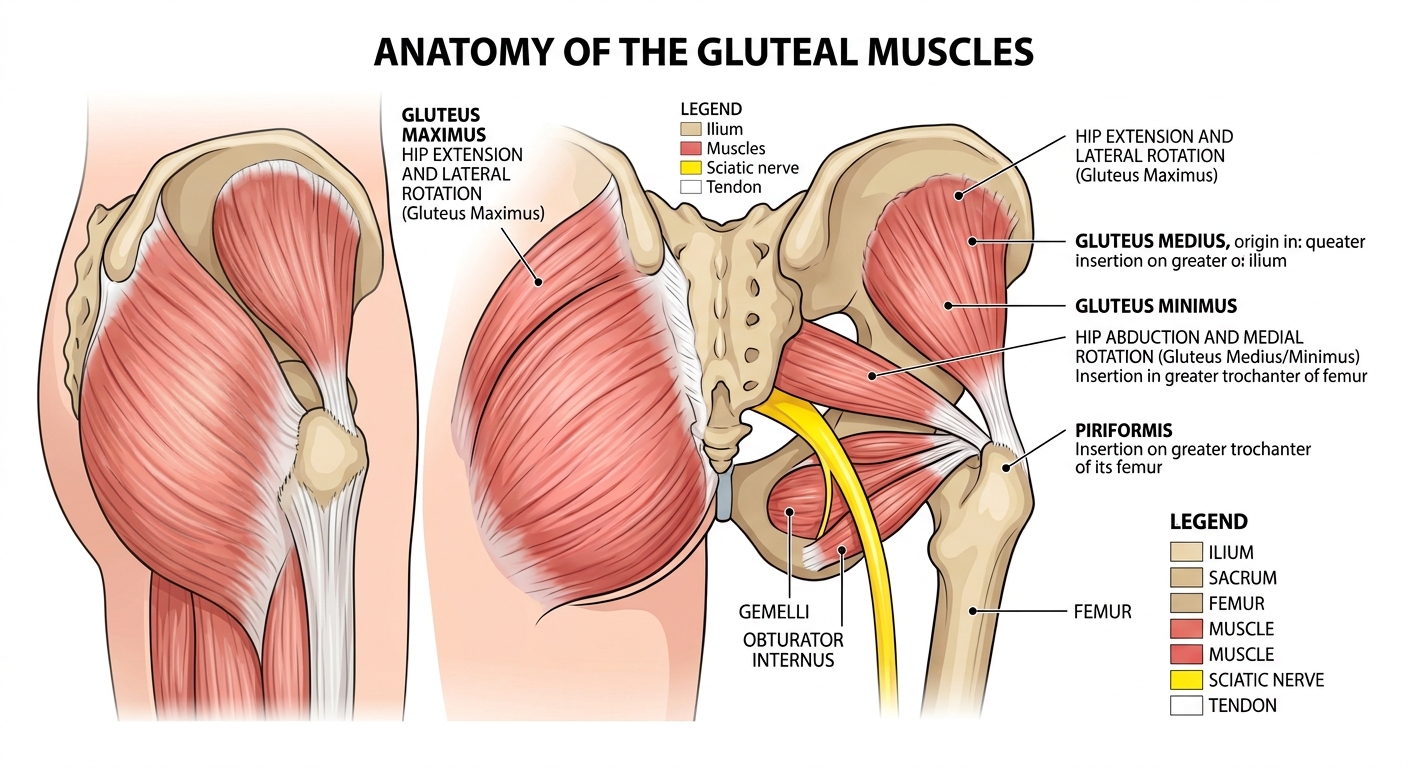
Gluteal muscles are used on a daily basis without you realizing or intending to use them. These muscles are very important for physical activity because of glutes being one of the biggest and most powerful muscles. Gluteal muscles consist of three muscles. They are the gluteus maximus, medius, and minimus. They support locomotion, provide stability and power during movements. These muscles let us walk upright and properly, along with the crucial role of hip extension. Strong glutes were associated with hard physical labor or being very athletic. Today, we have seen glute training become very popular in gyms and around homes because of the idea that training can be done with or without weights, bands, etc. We see a huge interest among women developing and shaping their glutes. Some do it for athletic competition and others for the social aspect of looking good. Regardless of the reason to develop the glutes, you must train all three muscles. The functions of these muscles are extension, abduction, external and internal rotation of the hips.
Let’s get into depth of each muscle. The gluteus maximus is the larger overall muscle in humans regardless if they workout or do nothing. Most of the time, the bigger the person the larger the gluteus maximus unless you’re small and develop your glutes. The primary function is to extend and rotate the hips, along with extending the trunk. The gluteus medius is the outer and upper portion of the glutes and the gluteus minimus is the lower and deepest portion under the other two muscles of the buttocks. The training of each muscle depends on different exercises because they develop according to the exercises performed. Maximus responds well to compound exercises like hip thrusts, squats, deadlifts that strengthen and overall shape the glutes. Isolation and abduction exercises like bulgarian split squat, side band walks, side cable laterals and abduction machine exercises work the medius and minimus muscles.
Overall, glute development depends on the frequency of training, sets and repetitions, progressive overload and recovery and diet. Training two or three times per week, at least 15-20 total sets per week and adding weight as needed is ideal for developing and strengthening all gluteus muscles. Recovery should be considered training every other day or every two days and eating a well balanced diet. The overall development will be noticed at a slow rate and can take up to 6 months or longer to see progress. But like any exercise program, patience is the key factor along with consistency to get and see the best results. You can find many programs for glutes online since it has become a very popular regimen among women and males of any age.
AS ALWAYS, STAY ACTIVE AND BE IN CONTROL OF YOUR MIND, BODY & SOUL
Paul Passino has a Bachelors of Science degree in human performance and sport with a health, education, and coaching minor, as well as 45 hours of sports administration and over 23 years of teaching P.E., weight training, and coaching.