

Spring is upon us, or should I say that after the mild winter we’ve been having, spring is still upon us. To be honest, I haven’t complained too much about the warm temperatures and no snow, maybe because I’ll have plenty of time for that as the year progresses. The Forest Service will close down the forests (hopefully before someone leaves a campfire burning). The streams will be too warm to fish with a clear conscience, and acequias will become trickles.
Before all that, I’m sure I’ll snap into the proper drought attitude, I’m doing it already. See, the weather’s still relatively cool and there’s a little snow on the ground, which makes me and thousands of other outdoor enthusiasts start thinking about getting out into the woods. This is not necessarily a great thing, especially in this era of industrial strength recreation. The mountains need a thick blanket of winter snowpack for growing crops, catching fish, and providing our cities with drinking water. But snow also protects mountain resources. The mountains need a hiatus.
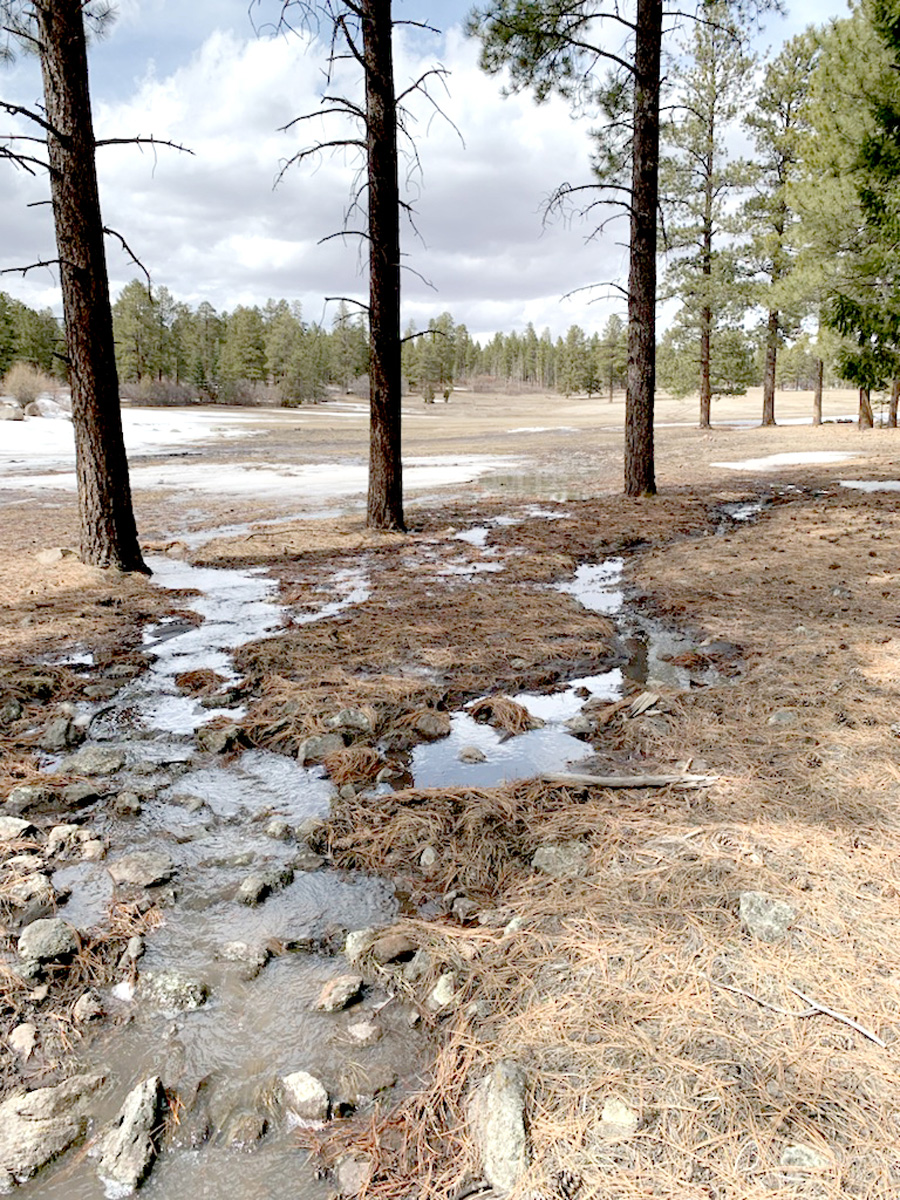
I’d never truly appreciated this before a couple years ago, the year of the Hermits Peak wildfire when there had been an extremely paltry snowpack. So paltry, in fact, that on a drive up the north slope of the Jemez Mountains sometime in March, I climbed all the way to 10,000 feet elevation before encountering snow on the road. In a meadow off to the side the snow had melted into puddles scattered among islands of short gray grass. The puddles were all connected by fresh tire tracks that cut a foot deep into the meadow. The largest puddle was where several riders had done donuts.
It was a sign of the times, a sight I could never have imagined growing up in New Mexico. When I was a boy, the winter snow was so heavy that we often had difficulty getting out of the driveway, let alone to the top of the Jemez. Much of this was because it snowed back then, feet at a time instead of inches.
The vehicles we drove were also inferior, without the Everest climbing capabilities that even modern mountain bikes possess. Our mountains were well defended, in other words, a painful truth in light of this early access to our favorite recreational spaces. Believe me, it actually hurts that I’ll be able to reach fishing spots that would normally be off limits until May.
What really concerns me is the shed hunting, since it almost requires an all terrain vehicle. Shed hunting is big business now, and since elk don’t normally drop antlers in the middle of well traveled roads, hunters have to drive into the forest to be successful, until off the beaten path becomes the beaten path. Tire tracks capture water destined for certain places in the forest and take it somewhere else. Since riders cross creeks, the water carried by tire tracks dumps silt into the streams.
The worst thing about tire tracks is that they’re usually another guy’s fault. What’s done is done, so you can’t make things any worse. Sometimes one is tempted to blaze his own trail; even if he sinks into the mud, he knows that his tracks will grass over before the next rider comes along with the same idea. Of course he has no way of knowing if this will come to pass. Either that or he doesn’t care.
I try not to get grouchy when it comes to taking care of our public lands, because I’m not sure it does any good. I’d rather pray for snow.