


Trout
Every New Mexican has at least one story to tell about someone from another state (even Colorado) describing their impression of our homeland, a sun-scorched wasteland of nothing but cactus and rattlesnakes. I am old enough to have forgotten ever being offended by such encounters. Certainly the fact that so many of our state’s spectacular high mountain gifts remain secret is something to be proud of. New Mexico really is the best.
On a recent trip to Awrizona, I experienced a version of the New Mexico story, only I played the role of the misinformed outsider. I have experienced a lot of our neighboring state, the Grand Canyon, Sonora, and the smell of palo verde trees in bloom. In spite of having caught trout in Arizona, though, most of my time there has been stereotypical. It’s really hot and dry there.
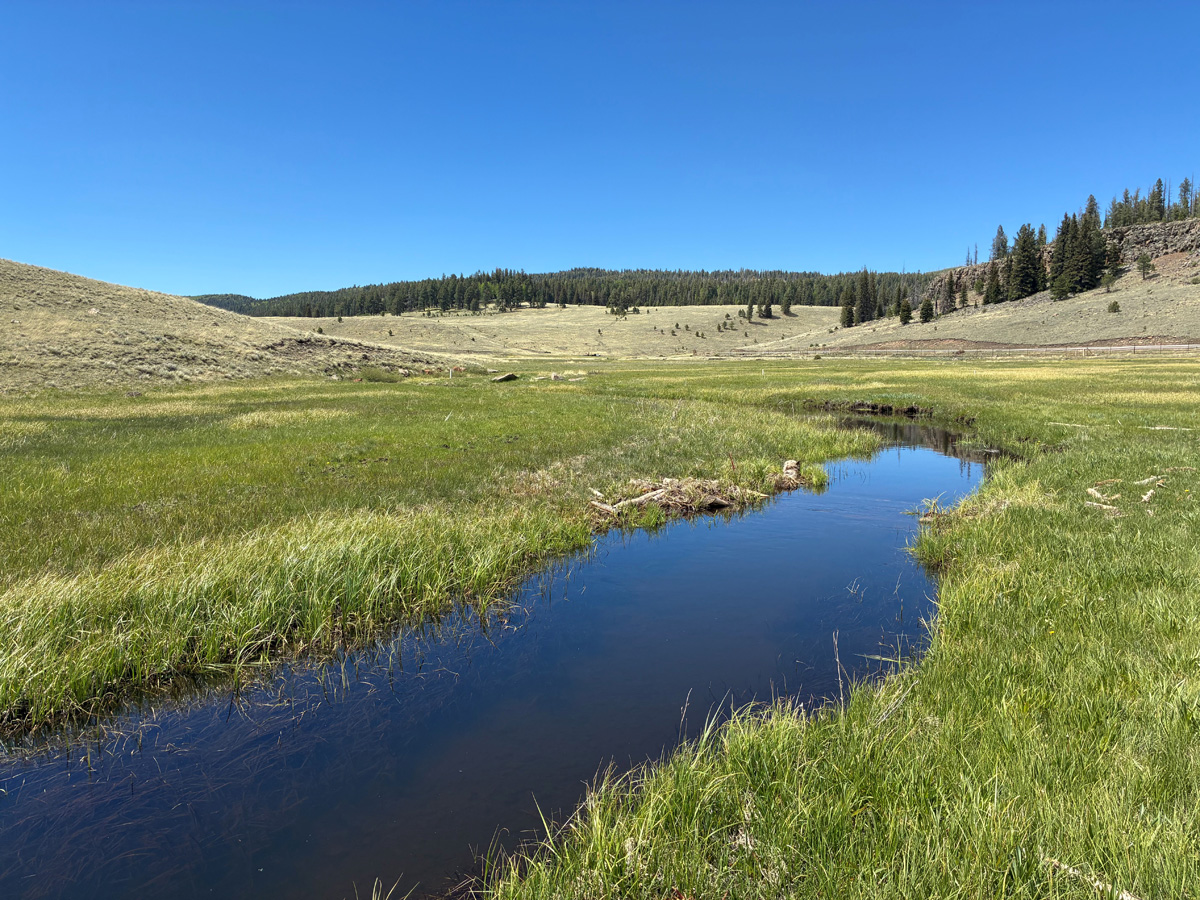
The White Mountains in the southeastern part of the state, however, are a lot like New Mexico. The ponderosa forests remind you of the Jemez area, the aspen groves of Midnight Meadows. It’s cool up there. We actually needed the heat from our campfire to stay warm.
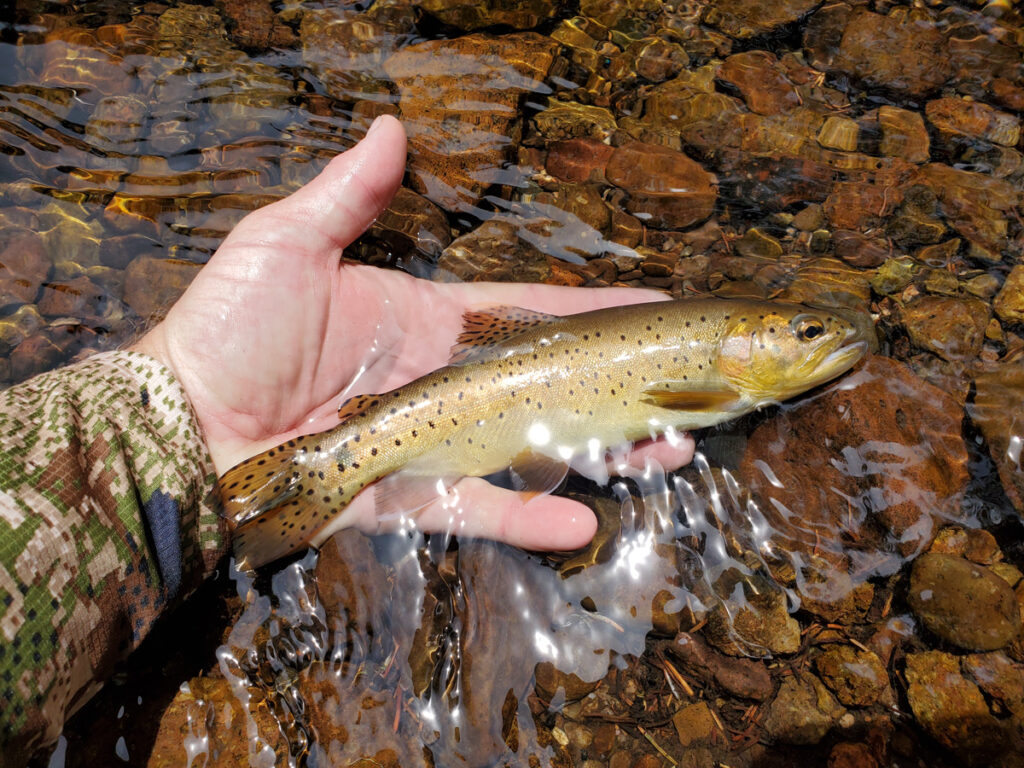
Aside from the surprise of such a spectacular landscape being so accessible – a few hours southwest of Grants, the White Mountains are as close as many Colorado ski areas – the best part about this corner of Arizona is its unique species of trout. The Apache trout is one of three trout species unique to the desert southwest, along with the Gila trout and Questa’s own Rio Grande cutthroat trout. Indeed, it shares physical features of both of its cousins – the sparse spotting of the cutthroat and the bronze color palette of the Gila – along with the white-edged fins of their common but distant relative, the rainbow trout.
Like our diverse regional land forms, the evolution of the southwestern trouts seems almost random. Why would this particular fish be at this place and not that one? It seems that if a certain trout were native to our landscape, it should be all over the place right?
Of course, species differentiation doesn’t really work that way. If an animal is isolated for a long enough period, it may become a species unto itself. Most of the time, this isolation is geographical, as in the Rio Grande cutthroat trout being confined to the Rio Grande basin. Gila trout evolved in the Gila River watershed, Apache trout in the Black and White River watersheds, and those systems are tributaries to the Salt River in Arizona. In other words, they occupied the same watershed. So how did they become separate species?
The isolation of Gilas and Apaches from each other was enforced by the fact that there was habitat between them that was too hostile for either species to occupy. Each species was marooned on a “sky island”, high mountain oases rising from and encircled on all sides by uninhabitable deserts. The Gila trout’s island was the Gila Wilderness and surrounding high elevations.
The Apache’s island was the White Mountains, which, now that I think about it, are as unique as the fish that swims in their creeks.